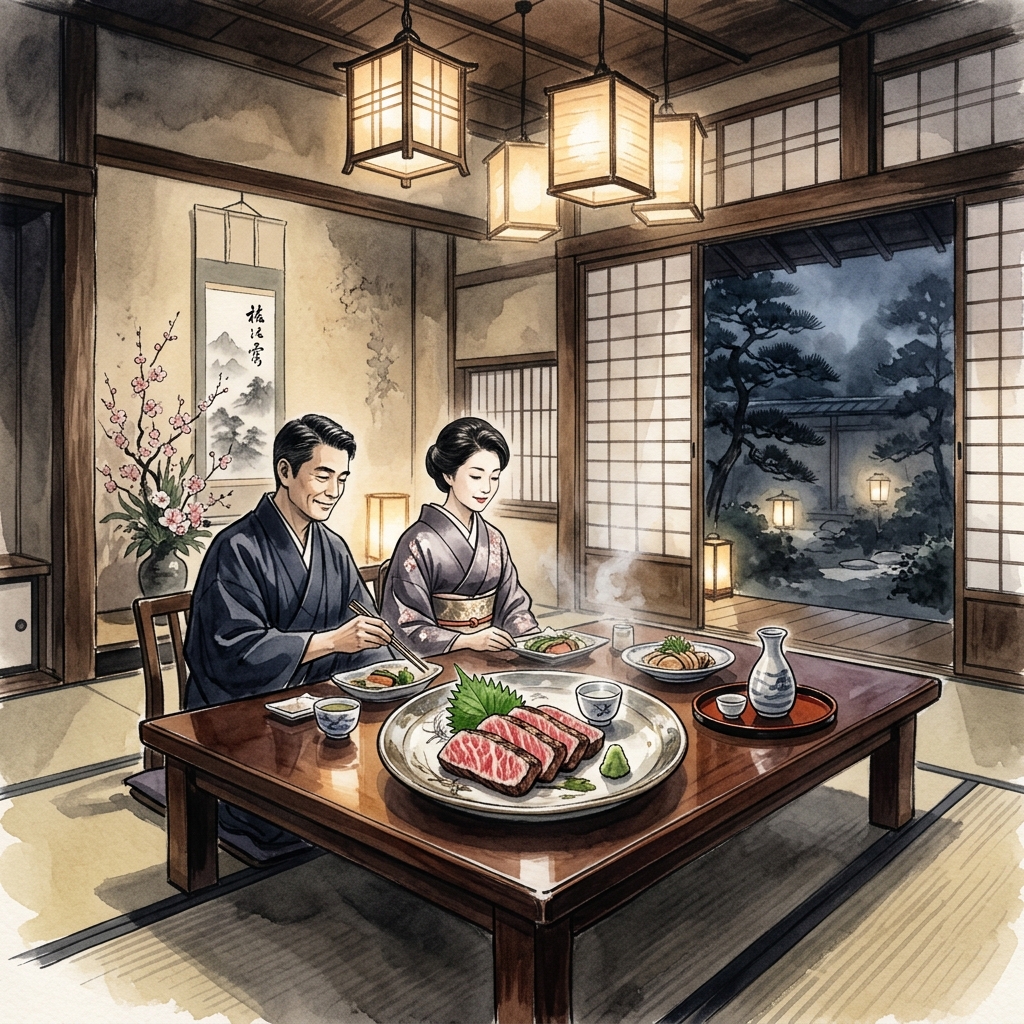
Most international buyers fixate on two cuts: ribeye (リブロース) and striploin (サーロイン). That's understandable — they're the cuts that built wagyu's global reputation. But if you're building a restaurant menu around Japanese wagyu, limiting yourself to two cuts is like visiting Kyoto and only seeing Kinkaku-ji.
I source wagyu from farms across Miyazaki and Kagoshima, and the cuts that excite me most are the ones most overseas buyers have never heard of. Here's the guide I wish I'd had when I started.
The 12 Essential Wagyu Cuts for Restaurant Menus
Japanese butchery divides the carcass differently from Western traditions. Where American butchers see 8 primal cuts, Japanese butchers identify 13 primals and over 30 sub-primals. This precision matters because each sub-primal has a distinct texture, fat distribution, and ideal cooking method.
| Japanese Name | English | BMS Range | Best Cooking | FOB Price (¥/kg) |
|---|---|---|---|---|
| ザブトン (Zabuton) | Chuck Flap | 8–11 | Yakiniku, tataki | ¥8,000–12,000 |
| ミスジ (Misuji) | Oyster Blade/Top Blade | 7–10 | Teppanyaki, sashimi | ¥7,000–10,000 |
| イチボ (Ichibo) | Top Sirloin Cap | 6–9 | Grilling, steak | ¥6,000–9,000 |
| トモサンカク (Tomosankaku) | Tri-Tip | 7–9 | Yakiniku, roast | ¥5,500–8,000 |
| カイノミ (Kainomi) | Flap Meat | 6–8 | Yakiniku, stir-fry | ¥5,000–7,500 |
| マルシン (Marushin) | Eye of Round | 4–6 | Roast beef, tataki | ¥3,500–5,500 |
| ランプ (Ranpu) | Rump | 5–8 | Steak, roast | ¥5,000–7,000 |
| ヒレ (Hire) | Tenderloin | 5–8 | Steak, katsu | ¥12,000–18,000 |
| リブロース (Rib Rosu) | Ribeye | 8–12 | Steak, sukiyaki | ¥15,000–25,000 |
| サーロイン (Saroin) | Striploin | 8–12 | Steak, shabu-shabu | ¥14,000–22,000 |
| ウデ (Ude) | Chuck Roll | 5–8 | Sukiyaki, slow cook | ¥4,000–6,500 |
| ハラミ (Harami) | Outside Skirt | 4–6 | Yakiniku | ¥6,000–9,000 |
Why Zabuton Is the Smart Buy for Most Restaurants
Here's the contrarian take: zabuton (chuck flap) is the most undervalued cut in Japanese wagyu. It comes from the chuck primal — typically associated with cheaper cuts — but in well-marbled wagyu cattle, the zabuton develops marbling patterns that rival ribeye at BMS 10+.
The economics are compelling. A zabuton at BMS 9 from Miyazaki costs roughly ¥9,000–10,000/kg FOB, while a ribeye at the same BMS runs ¥18,000–22,000/kg. For a restaurant serving 80g portions, that's the difference between a ¥720 and a ¥1,600 meat cost per plate.
"The zabuton is what I recommend to every chef who wants wagyu on their menu without the A5 ribeye price tag. The marbling is extraordinary, and the texture — slightly more structured than ribeye — actually works better for yakiniku."
Building a Wagyu Menu: The Three-Tier Approach
The most successful wagyu restaurants I work with use a three-tier approach:
Tier 1 — Hero Cuts (High Margin, High Theater)
- A5 Ribeye or Striploin — the showpiece, served teppanyaki-style in 50–80g portions
- A5 Tenderloin — for guests who prefer lean luxury
- Price these at 4–5× food cost for special-occasion positioning
Tier 2 — Discovery Cuts (Best Value, Best Storytelling)
- Zabuton, Misuji, Ichibo — exceptional marbling at 30–50% lower cost
- These are your menu differentiators — cuts most competitors don't offer
- Price at 3–4× food cost; the story sells itself
Tier 3 — Volume Cuts (Accessible Wagyu Experience)
- Kainomi, Tomosankaku, Chuck Roll — for yakiniku platters and lunch sets
- Lower BMS (5–7) but still unmistakably wagyu
- Price at 3× food cost to drive trial and repeat visits
Portion Sizes: The Most Common Mistake
Western restaurants typically serve 200–300g steaks. For Japanese wagyu above BMS 7, this is far too much. The richness of highly marbled beef means optimal portion sizes are:
- A5 (BMS 8–12): 50–80g per person for steak, 30–40g per slice for yakiniku
- A4 (BMS 6–7): 80–120g per person
- A3 and below: 120–180g per person
Smaller portions at higher prices per gram actually improve the dining experience. Guests who eat 300g of A5 wagyu often feel overwhelmed by the richness — and that means they won't come back.
Sourcing: Whole Carcass vs. Primal vs. Portion-Cut
| Buying Method | MOQ | Cost Savings | Best For |
|---|---|---|---|
| Whole Carcass | ~450kg | 20–30% vs. portion | Large yakiniku chains |
| Primal Cuts | 5–15kg per cut | 10–15% vs. portion | Mid-size restaurants |
| Portion-Cut (Vacuum-packed) | 1–5kg per SKU | Baseline | Small restaurants, hotels |
Build Your Wagyu Menu with WAGYU NINJA
We work with heritage farms in Miyazaki and Kagoshima. From zabuton to A5 ribeye, shipped frozen to 50+ countries with JMGA traceability certificates.
Request Cut Guide & Pricing →FAQ
What is the minimum order for wagyu cuts from Japan?
Most exporters require 5–15kg per cut for primal orders, or 1–5kg per SKU for portion-cut. WAGYU NINJA offers mixed-cut trial orders starting at 10kg total across multiple cuts.
Can I get specific BMS scores for each cut?
Yes. When buying by the primal or carcass, the JMGA grade certificate specifies the BMS score. For portion-cut, we can source within a BMS range (e.g., BMS 8–10 zabuton).
How should wagyu cuts be stored after import?
Vacuum-packed wagyu maintains quality for 12–18 months at -25°C or below. Thaw slowly in refrigerator (24–48 hours) before use. Never refreeze.
What's the best cut for wagyu sashimi (raw beef)?
Misuji (oyster blade) and hire (tenderloin) are the preferred cuts for wagyu sashimi. Look for BMS 7+ with uniform marbling. The meat must come from a HACCP-certified facility with traceability documentation.

Karen Hashimoto
Curator & Export Compliance Director · WAGYU NINJA
Karen sources directly from Japanese producers and handles export compliance for B2B buyers in 50+ countries. Based in Fukuoka, Japan. @konnichiwa.karen