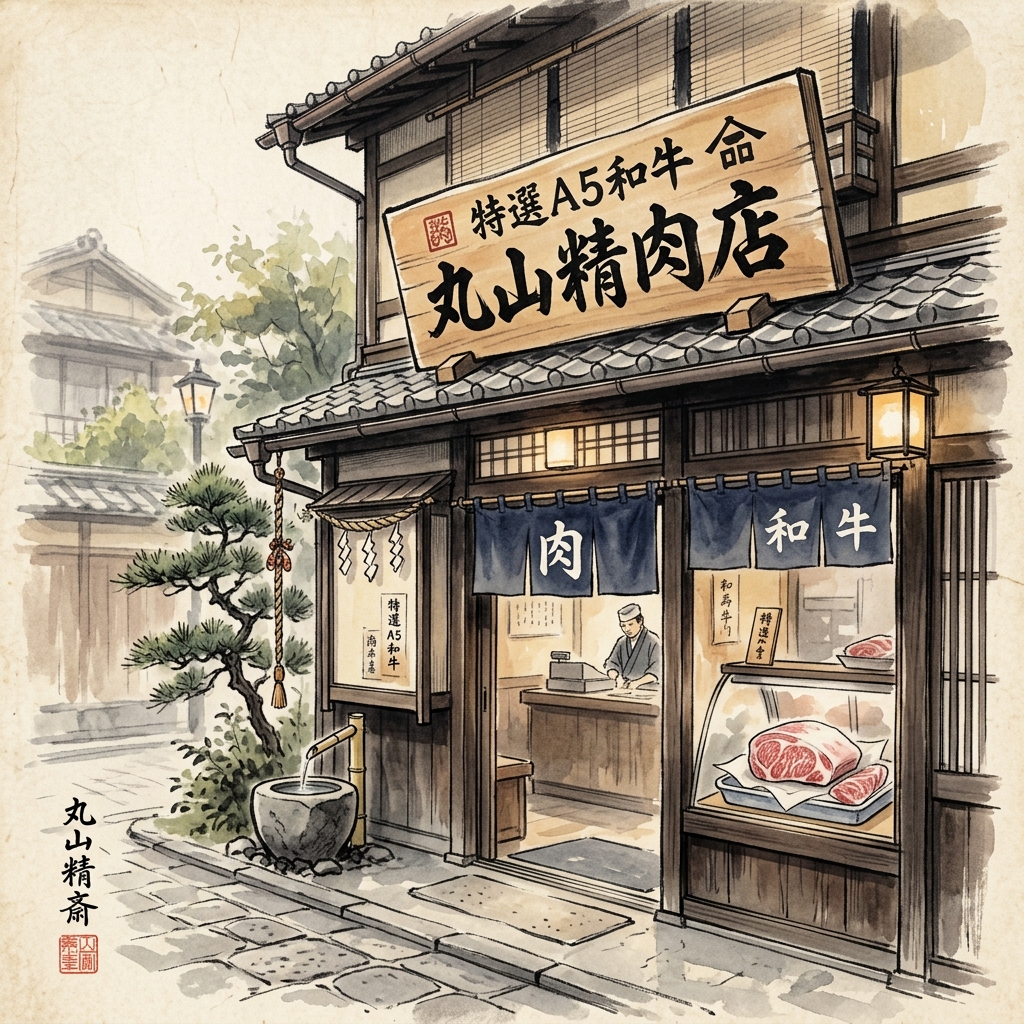
As European chefs and specialty food importers discover authentic Japanese wagyu — real A5 Miyazaki, Kagoshima Kurobuta, Omi — I'm fielding more EU enquiries than ever. Germany, France, the Netherlands, and the Nordics are all actively building wagyu programmes for fine-dining and premium retail.
But getting Japanese wagyu beef legally into the EU is genuinely complicated. The documentation requirements are stricter than almost any other food import category, the logistics window for chilled product is tight, and — here's the part most buyers don't realise until they've already committed to a supplier — the bottleneck isn't the paperwork. It's the slaughterhouses.
Who Regulates Japanese Wagyu Exports?
Japan's wagyu export chain involves three official bodies, and every export touches all three. The Japan Meat Grading Association (JMGA) certifies the grade of each carcass at the slaughterhouse; the Animal Quarantine Service (AQS) under Japan's Ministry of Agriculture, Forestry and Fisheries (MAFF) conducts veterinary inspection and issues the export health certificate; and MAFF itself maintains the list of approved processing establishments permitted to export to each destination market.
For EU-bound shipments, the European Commission adds a fourth layer: the slaughterhouse and cutting plant must appear on the EU's list of approved third-country establishments (published under Regulation (EU) 2017/625). If the facility isn't on that list, the shipment cannot legally enter any EU member state — full stop.
The Slaughterhouse Bottleneck (The Part Most Buyers Miss)
This is my most important piece of advice to any EU buyer: ask your supplier which slaughterhouse processes the wagyu, and verify it is on the EU approved list before signing anything.
As of mid-2024, Japan had roughly four slaughterhouses certified to process beef for EU export. That number has been growing — Japan's MAFF reported that 70 facilities held overseas certifications across all destination markets as of July 2024, up 75% from 40 facilities the prior year — but EU-specific approvals remain a small subset of that total.
Contrast this with the situation for US-bound wagyu, where the list of USDA-approved facilities is considerably longer. Many Japanese suppliers can legitimately ship to the US but cannot yet ship to the EU. A supplier who tells you they "export wagyu internationally" may simply not have an EU-approved processing partner.
The EU's approved establishments list is publicly searchable through the European Commission's DG SANTE approved establishments database. Any reputable exporter should hand you their establishment approval number without hesitation.
Required Documentation for EU Import
Every wagyu shipment entering the EU from Japan requires the following documents. Missing any one of them will result in detention at the border inspection post (BIP).
| Document | Issued by | Purpose |
|---|---|---|
| Export Health Certificate (EHC) | Japan Animal Quarantine Service (MAFF) | Required for all EU-bound beef |
| JMGA Grading Certificate | Japan Meat Grading Association | Confirms yield grade and BMS score |
| Cattle Individual ID Certificate | MAFF Livestock Registry | Traceability to individual animal |
| Commercial Invoice & Packing List | Exporter | Customs clearance |
| EUR.1 Movement Certificate | Japanese customs authority | Claim JEFTA preferential tariff |
| Import Health Certificate (IHC) | EU Border Inspection Post | Completed on EU side at entry port |
The Export Health Certificate is the most time-sensitive document. It must be issued within a specific window before departure and must exactly match the establishment number on the EU approved list. Any discrepancy — even a formatting difference — can trigger a hold.
HS Codes for Wagyu Beef Into the EU
Correct HS code classification determines your tariff rate, import controls category, and veterinary inspection requirements. Using the wrong code is a common and costly mistake.
| Product Type | HS Code | Notes |
|---|---|---|
| Fresh / chilled bone-in beef | 0201.20 | Cuts with bone, not frozen |
| Fresh / chilled boneless beef | 0201.30 | Striploin, ribeye, tenderloin — chilled |
| Frozen bone-in beef | 0202.20 | Cuts with bone, frozen |
| Frozen boneless beef | 0202.30 | Most wagyu exports — boneless, frozen |
| Offal (tongue, cheek, liver) | 0206.xx | Classified separately by cut type |
The vast majority of wagyu exported to the EU travels under 0202.30 (frozen boneless). Chilled (0201.30) is possible — and preferred by top-end restaurants for texture — but the logistics are significantly harder (see Cold Chain section below). Make sure your customs broker is not defaulting to a generic "beef" code; at the EU's 10-digit TARIC level the subheading affects which tariff rate quota (TRQ) applies.
Tariffs Under JEFTA: What EU Buyers Actually Pay
The EU-Japan Economic Partnership Agreement (JEFTA), in force since 1 February 2019, is progressively reducing EU tariffs on Japanese beef over a 15-year schedule. This is directly relevant to your landed cost calculation.
| Tariff Scenario | Approx. Rate (2026) | Notes |
|---|---|---|
| MFN rate (no preferential treatment) | ~12.8% ad valorem + specific duty | Applies if EUR.1 certificate is missing |
| JEFTA in-quota preferential rate | Lower — verify on Access2Markets | Requires EUR.1 or REX declaration |
| JEFTA out-of-quota rate | Staged reduction from MFN baseline | Still lower than MFN for qualifying shipments |
Always supply the EUR.1 movement certificate or a registered exporter (REX) declaration. EU importers who skip this step pay the full MFN rate — a significant cost on premium wagyu valued at €600–€1,200+/kg. Consult the European Commission's Access2Markets portal for the exact in-force JEFTA schedule for the current calendar year.
Cold Chain: Chilled vs Frozen Wagyu for EU Import
This decision is often made for you by logistics constraints, but it's worth understanding the trade-offs fully before committing to a programme.
| Factor | Chilled Wagyu (0201.30) | Frozen Wagyu (0202.30) |
|---|---|---|
| Required temperature | 0°C to +2°C throughout | −18°C or below throughout |
| Shelf life from slaughter | 60–100 days (vacuum-packed) | 12–18 months |
| Preferred transport | Air freight (direct, fast) | Air or sea reefer container |
| Transit risk | High — any break in chain = spoilage | Lower — temperature spikes logged |
| Chef preference | Superior texture; preferred by top kitchens | Acceptable for most applications |
| EU delivery time | 3–5 days from Japan (air only) | 3–5 days (air) or 30–45 days (sea) |
Chilled wagyu arrives with far superior texture — the muscle fibres haven't undergone freeze-thaw stress — and this matters enormously for sashimi-style preparations and teppanyaki. However, the supply chain is unforgiving. Slaughter date, packing, flight booking, and EU customs clearance must all be sequenced precisely. A single day's delay at customs consumes most of your buffer.
For buyers establishing a new programme, I recommend starting with frozen to validate the documentation workflow, then introducing chilled SKUs once you have confidence in the logistics chain.
Source EU-Compliant Japanese Wagyu — Direct from Japan
WAGYUNINJA works exclusively with slaughterhouses that hold international certifications. We manage every export document — JMGA certificate, AQS health certificate, EUR.1 — so your team receives a complete import file with each delivery.
Request a Wagyu Quote → Chat on WhatsAppStep-by-Step: The Import Process in Practice
- Verify your supplier's EU-approved establishment number. Check the EU TRACES / DG SANTE database before any commercial commitment.
- Agree product specifications — cut, grade (A4 vs A5, BMS range), state (chilled or frozen), and packaging requirements.
- Supplier processes cattle at the EU-approved slaughterhouse — JMGA graders certify the carcass grade on the floor at time of slaughter.
- Japan AQS veterinary inspection — the inspecting officer issues the Export Health Certificate linked to this specific shipment and establishment.
- Booking and packing — vacuum packing, temperature dataloggers placed inside each carton, master cartons labelled with establishment number.
- Air freight (or reefer sea) under active temperature monitoring; your forwarder should have experience with IATA Class-B perishables.
- Pre-notify the EU Border Inspection Post (BIP) at least one working day before the expected arrival of the shipment (mandatory under Regulation (EU) 2017/625).
- BIP clearance — veterinary and document checks; possible physical inspection. Common EU BIPs for wagyu: Amsterdam Schiphol, Frankfurt, Paris CDG, Copenhagen.
- Import Health Certificate issued; goods released into EU free circulation for domestic distribution.
What to Look for in a Japanese Wagyu Supplier (EU-Specific)
Beyond standard quality indicators, EU buyers must verify four things that US or Singapore buyers may not require:
- EU establishment number — the slaughterhouse must appear on the European Commission's DG SANTE approved list.
- EUR.1 / REX capability — does the exporter have a REX registration or routinely issue EUR.1 certificates? Unfamiliarity is a red flag.
- AQS certificate format — the EU requires specific bilateral health certificate formats agreed between MAFF and DG SANTE. Ask to see a sample from a prior EU shipment.
- Full traceability documentation — individual cattle ID, farm name, prefecture, feeding history. This is a legal requirement and a valuable marketing asset for your end customers. See our guide on how the JMGA grading system works for the verification documents to request.
Frequently Asked Questions
Can I import any Japanese wagyu into the EU, or only specific regions?
EU approval covers the slaughterhouse / cutting plant, not a specific wagyu prefecture or brand. Miyazaki A5, Kagoshima Kurobuta, and Omi beef are all potentially eligible — provided the cattle are processed at an EU-approved facility. In practice, many celebrated regional brands are processed at facilities without EU certification, making the effective supply of named-brand wagyu for EU import narrower than it appears.
What HS code is used for wagyu beef imported into the EU?
Most wagyu exports travel under HS code 0202.30 (frozen, boneless bovine meat). Chilled boneless cuts use 0201.30. Bone-in cuts use 0201.20 (chilled) or 0202.20 (frozen). Offal (tongue, cheek) falls under 0206.xx. Correct classification determines your tariff rate and border inspection category.
What is the EU import tariff on Japanese wagyu under JEFTA?
Under JEFTA (in force since 1 February 2019), EU tariffs on Japanese beef are being progressively reduced from the MFN baseline of approximately 12.8% ad valorem over 15 years. An EUR.1 movement certificate or REX declaration is required to claim the preferential rate. Check the European Commission's Access2Markets portal for the current year's in-force rate.
How long does EU customs clearance take for wagyu beef?
Budget 24–48 hours for Border Inspection Post (BIP) clearance under normal conditions. Pre-notification at least one working day before arrival is mandatory under Regulation (EU) 2017/625. For chilled wagyu with a 60–100 day shelf life, this window is tight. Use a customs broker who specialises in veterinary products at your target BIP.
Is Kobe beef available for EU import?
Kobe beef requires processing within Hyogo Prefecture under strict certification rules. Whether a Kobe-certifying slaughterhouse also holds EU approval should be verified directly with the Kobe Beef Marketing & Distribution Promotion Association. As of 2024, this remains a genuine constraint for EU buyers.
What labelling is required for wagyu beef sold in the EU?
EU beef labelling regulations (Regulation (EU) No 1337/2013) require "Origin: Japan" on all beef packaging, along with the approval number of the slaughterhouse, cutting plant, and cold store. Retail-facing packaging must meet the language requirements of the destination member state.

Karen Hashimoto
Curator & Export Compliance Director · WAGYU NINJA
Karen sources directly from Japanese producers and handles export compliance for B2B buyers in 50+ countries. Based in Fukuoka, Japan. @konnichiwa.karen