Sake & Spirits
How to Import Sake to the USA: TTB, FDA & 3-Tier Guide (2026)
B2B guide to importing sake into the USA — TTB importer's basic permit, COLA and formula approval, FDA prior notice, the three-tier system, HTS 2206.00.45 and the 15% tariff.
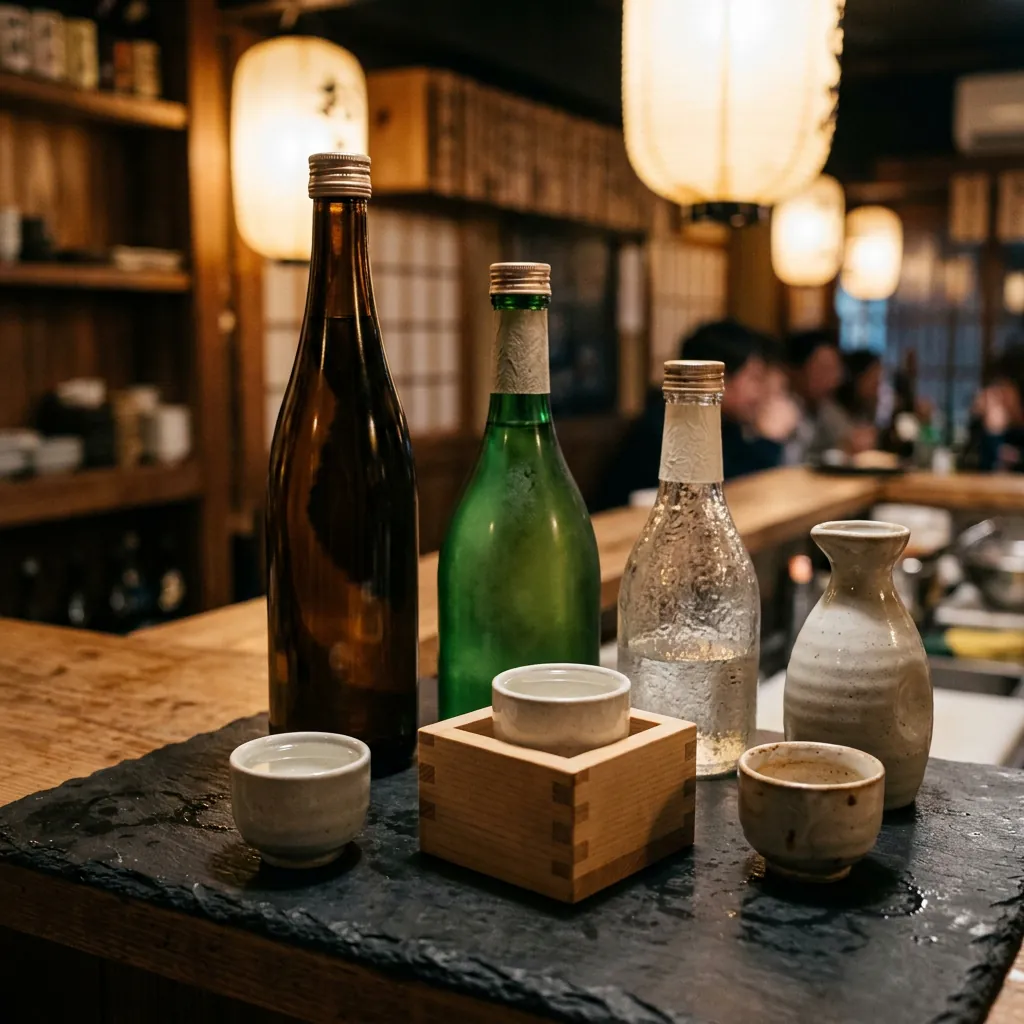
To import sake to the USA you need three things before a single bottle ships: a federal Importer's Basic Permit from the Alcohol and Tobacco Tax and Trade Bureau (TTB), an approved Certificate of Label Approval (COLA) for every product (sake also usually needs TTB formula approval first), and a route into the three-tier distribution system — importer to wholesaler to retailer. The quirk that trips up almost every first-time buyer: for labeling, TTB treats sake as wine, but for federal excise tax the Internal Revenue Code treats sake as beer. The friction is rarely at the federal border — it is in state licensing and cold-chain handling.
I sell Nihonshu (日本酒) to American buyers every month from here in Japan, and the same misconceptions surface on almost every first call. This is the guide I give them.
Is sake regulated as wine, beer, or spirits in the US?
Sake is regulated as both wine and beer, depending on which rule you are looking at — and never as distilled spirits, because it is fermented and well under 24% ABV (most commercial sake is 14–17%). For labeling and advertising, the Federal Alcohol Administration Act (FAA Act) treats sake as wine, so you file a wine-style COLA under 27 CFR part 4. For production and federal excise tax, the Internal Revenue Code treats sake as beer under 27 CFR part 25.
This split is the single most useful thing to understand before you start. It means your label follows wine rules, but your federal excise tax is assessed at the beer rate — $18.00 per 31-gallon barrel at the standard rate, with reduced Craft Beverage Modernization Act rates available on lower volumes — rather than the wine or (much higher) spirits rate. You do not need a distilled-spirits permit, and you do not need to navigate spirits-level compliance.
What federal license do I need to import sake?
You need a TTB Importer's Basic Permit before you can bring sake into US commerce, filed on TTB Form 5100.24 through Permits Online. The permit is free, but it is issued only to a business that maintains and staffs an office in the United States — which means the importer of record must be a US entity, not the Japanese brewery (kuramoto, 蔵元).
This is the structural reality most overseas sellers miss: as the Japanese exporter, I cannot be your US importer. You, or your US partner, hold the permit. If you do not have a US business, you contract with an existing licensed importer instead. TTB does a background review (no liquor-law felonies or recent relevant misdemeanors), and processing averages about six weeks — so start well before your first planned shipment.
Who regulates what: TTB, FDA, CBP and the states
Four authorities touch an imported sake shipment, and confusing their roles is where paperwork stalls. The table below is the map I send to every new buyer.
| Authority | What it governs | What you must do |
|---|---|---|
| TTB (Alcohol & Tobacco Tax and Trade Bureau) | Federal alcohol permits, formula and label approval, excise tax | Hold an Importer's Basic Permit; get formula approval + a COLA per label; pay beer-rate excise tax |
| FDA (Food and Drug Administration) | Food safety, facility registration, shipment notice | Brewery registered as an FDA food facility; file Prior Notice for each shipment |
| CBP / USITC (Customs & the Tariff Schedule) | Classification, duty, entry | Classify under HTS 2206.00.45; pay the applicable duty; file the customs entry |
| State ABC (Alcoholic Beverage Control) | Distribution and retail sale within each state | Obtain state licensing; sell through the three-tier system |
The federal layer (TTB, FDA, CBP) is national and consistent. The state layer fragments into fifty rulebooks.
Do I need a COLA, and what about formula approval?
Yes — every distinct sake label needs an approved Certificate of Label Approval (COLA) from TTB before the product enters US commerce, filed on Form 5100.31 through COLAs Online. Here is the sake-specific catch most wine importers don't expect: because sake is a fermented product made with rice (and often with added ingredients), TTB generally requires formula approval first, submitted through Formulas Online, with the approved formula number referenced on the COLA application.
A compliant US sake label must carry the brand name and class/type, the producer/importer details, the alcohol content, the net contents, and the mandatory GOVERNMENT WARNING statement required by the Alcoholic Beverage Labeling Act of 1988 (27 CFR part 16). The words "GOVERNMENT WARNING" must appear in bold capitals; the rest must be legible and unbolded. The costliest mistake I see is shipping the container before COLA approval lands, assuming approval is a formality. It is not. You cannot legally release the product without it — so have formula approval and the COLA in hand before the brewery loads.
What does the FDA require for imported sake?
Sake is a food, so FDA rules apply on top of TTB's. Two requirements matter most: the foreign producing facility must be registered with FDA, and a Prior Notice must be filed electronically for every shipment before it arrives — no less than eight hours before arrival by ocean, four hours by air. Missing Prior Notice means automatic refusal at the border. These obligations flow from the Bioterrorism Act of 2002.
The good news for alcohol: importers of alcoholic beverages are exempt from the Foreign Supplier Verification Program (FSVP). So while you still register the brewery and file Prior Notice, you avoid the heavy supplier-verification workload a non-alcoholic food importer faces — for contrast, see how much heavier the food-safety lift is in our guide to importing Japanese dried shiitake.
The three-tier system: the part nobody warns you about
The hardest part of importing sake to the USA is not federal — it is the three-tier system, the post-Prohibition structure (enabled by the 21st Amendment) that legally separates suppliers/importers, wholesalers/distributors, and retailers. In most states an importer cannot sell directly to a restaurant or store; the product must pass through a licensed wholesaler first.
Each state runs its own version. The 18 control states — Alabama, Idaho, Iowa, Maine, Maryland, Michigan, Mississippi, Montana, New Hampshire, North Carolina, Ohio, Oregon, Pennsylvania, Utah, Vermont, Virginia, West Virginia and Wyoming — have the state itself acting as wholesaler (and sometimes retailer) for some categories. The remaining license states issue private wholesale licenses. Rules on self-distribution, distributor franchise protections, and logistics differ state to state. A sake easy to place in California may need an entirely different partner in Pennsylvania.
So your real commercial question is not "can I clear customs" — it is "which licensed wholesaler in my target state will carry my brand." Line up distribution before you import volume. I have watched importers clear a full container federally and then sit on it for months for lack of a wholesaler agreement.
HTS code, duty, and the 15% tariff since August 2025
Sake is classified under HTS subheading 2206.00.45 ("rice wine or sake"), within heading 2206.00 for other fermented beverages. The historic Column 1 (general) duty was a low cents-per-liter specific rate — but that is no longer the whole story.
Since August 7, 2025, most Japanese-origin goods entering the US — sake included — carry a 15% "reciprocal" tariff under the US–Japan framework agreement, implemented by Executive Order 14345 in September 2025. Importantly, the 15% is inclusive of the normal MFN rate, not stacked on top: where the existing Column 1 rate is below 15%, the additional duty brings the total to 15%; where it is already 15% or higher, no extra duty applies. Because tariff treatment has been in flux, confirm the current rate for your exact line on the USITC Harmonized Tariff Schedule and with your customs broker before each shipment. Our 2026 tariff overview for wagyu, matcha and nori tracks the broader picture.
The insider warning: cold chain beats tariff every time
Here is what most exporters won't tell you, because handling it correctly costs them margin: for premium sake, storage temperature destroys more value than any tariff ever will. Ginjo and Daiginjo are aromatic and heat-sensitive; namazake (生酒, unpasteurized sake) is fragile enough that it should never leave a refrigerated chain at all. Yet most US wine distributors store and truck at ambient temperature, because that is fine for the still wine filling their warehouses.
Last autumn a Brooklyn izakaya group emailed me, baffled that a Daiginjo they had loved on a trip to Niigata tasted flat and slightly stewed when it arrived through a non-specialist importer. Nothing was wrong with the brewery's product — it had spent a summer in a hot warehouse and a hotter truck. The fix is not exotic: specify refrigerated (reefer) ocean containers, confirm your wholesaler has temperature-controlled storage, and treat your better grades like the perishables they are. The American premium-sake buyer can taste the difference, and that difference is your whole price premium.
The demand is real: Japan's total sake exports reached a record ¥45.9 billion in 2025 (up 5.5% year on year), and the United States remained the largest market by volume at about 7,720 kiloliters — second only to China by value at ¥11.0 billion. The brands that win in the US are the ones whose importers respect the chain from kura to glass.
How to import sake to the USA: the sequence
- Form or partner with a US entity to be the importer of record.
- Apply for the TTB Importer's Basic Permit (Form 5100.24) — start early.
- Register the Japanese brewery with FDA as a food facility.
- Obtain TTB formula approval, then a COLA for each label before shipping.
- Secure a licensed wholesaler in each target state (three-tier).
- Classify under HTS 2206.00.45, confirm the current 15% tariff treatment, and engage a customs broker.
- File FDA Prior Notice for each shipment and ship in temperature-controlled containers.
- Pay beer-rate federal excise tax and any state taxes; release to your wholesaler.
Frequently Asked Questions
Do I need a liquor license to import sake into the US?
You do not need a distilled-spirits license. You need a TTB Importer's Basic Permit, which covers wine — and sake is treated as wine for labeling. Separately, you (or your distributor) need state-level alcohol licensing to distribute and sell.
Is sake taxed as wine or beer at the federal level?
As beer. The Internal Revenue Code treats sake as beer for excise tax (standard $18.00 per 31-gallon barrel, with reduced CBMA rates on lower volumes), even though the FAA Act treats it as wine for labeling.
How long does the import permit take?
A TTB Importer's Basic Permit averages about six weeks, depending on application completeness and TTB's queue. Formula approval and COLA are separate steps — never schedule a shipment to arrive before the COLA is confirmed.
Does imported sake require FDA registration and prior notice?
Yes. The Japanese facility must be registered with FDA, and Prior Notice must be filed before each shipment (at least eight hours before ocean arrival). However, alcoholic-beverage importers are exempt from FSVP.
What HTS code is sake, and what is the duty?
Sake is classified under HTS 2206.00.45 ("rice wine or sake"). Since August 7, 2025 most Japanese goods, including sake, carry a 15% reciprocal tariff inclusive of the base rate — confirm the current figure on the USITC HTS and with your broker.
Can I sell imported sake directly to restaurants?
Usually not. In most states the three-tier system requires sake to pass from the importer to a licensed wholesaler before reaching a restaurant or retailer. A minority of states allow limited self-distribution; check the destination state's ABC rules.
This article is general guidance, not legal advice; confirm current requirements with TTB, FDA, and your customs broker.
Authoritative sources: TTB — How Do I Import Sake? · FDA — Prior Notice of Imported Foods · USITC Harmonized Tariff Schedule
Ready to source from Japan?
Tell us the product, volume and destination. Karen will confirm availability, documents and lead time.