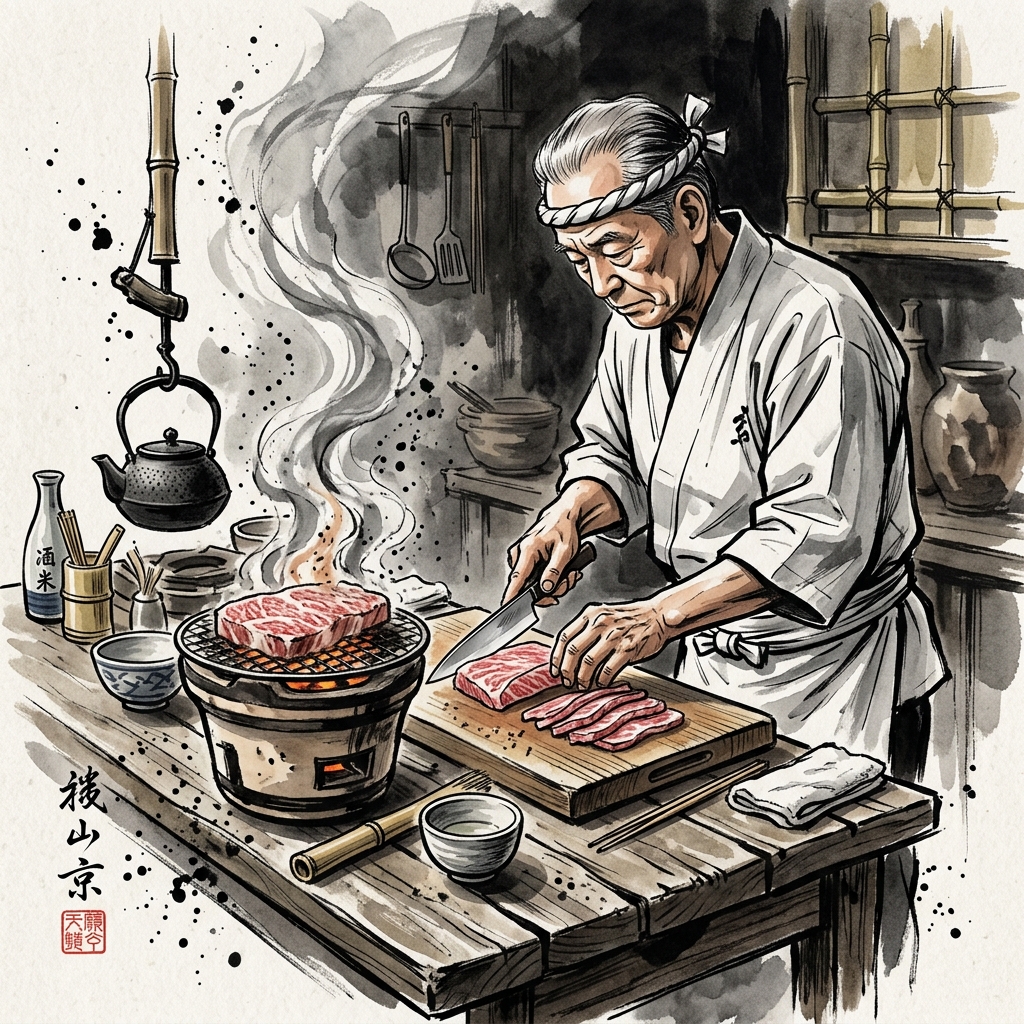
Quick Answer: Successful wagyu menu engineering requires: small portions (50-100g for A5), proper temperature management (room temp 30 min before cooking), offering both A5 hero items and A4 volume items, and educating staff on provenance storytelling. Restaurants that tell the wagyu story see 15-25% higher per-table spend.
The Menu Engineering Framework
| Strategy | Implementation | Revenue Impact |
|---|---|---|
| Hero Item (A5) | Small portion, high price, tasting menu | Drives prestige, social media |
| Volume Item (A4) | Full steak portion, competitive price | Generates majority of revenue |
| Entry Item | Wagyu slider/tartare, accessible price | Converts first-time wagyu buyers |
| Add-on | Wagyu upgrade option on existing dish | Incremental revenue per table |
Portion Sizing Guide
- A5 BMS 10+: 50-80g per person — rich enough that larger portions overwhelm
- A5 BMS 8-9: 80-120g — slightly less intense, can handle larger cuts
- A4 BMS 6-7: 120-200g — balanced richness allows full steak experience
- Wagyu sliders/tartare: 30-50g — entry-level wagyu experience
Staff Training Essentials
Your servers are your best salespeople. Equip them with:
- The farm story (Miyazaki, 32-month feeding, individual animal care)
- How to explain BMS scores in simple terms
- Proper pronunciation guide (WAH-gyoo, not WAG-you)
- Recommended wine/sake pairings
- Why the price is justified (scarcity, care, flavor)
Build Your Wagyu Program
We help restaurants develop wagyu menus — from cut selection to staff training materials. Start with a consultation and tasting.
Schedule Wagyu Consultation →FAQ
How should wagyu be cooked?
A5 wagyu is best seared briefly on very high heat — 30-45 seconds per side for thin slices, medium-rare for thicker cuts. The fat should melt, not render out.
What is the best cut for a restaurant starter?
Zabuton (Denver steak) offers excellent marbling at 40-50% the cost of ribeye. Perfect for testing wagyu on your menu before committing to premium cuts.

Karen Hashimoto
Curator & Export Compliance Director · WAGYU NINJA
Karen sources directly from Japanese producers and handles export compliance for B2B buyers in 50+ countries. Based in Fukuoka, Japan. @konnichiwa.karen