Why True Organic Matcha is Historically Rare
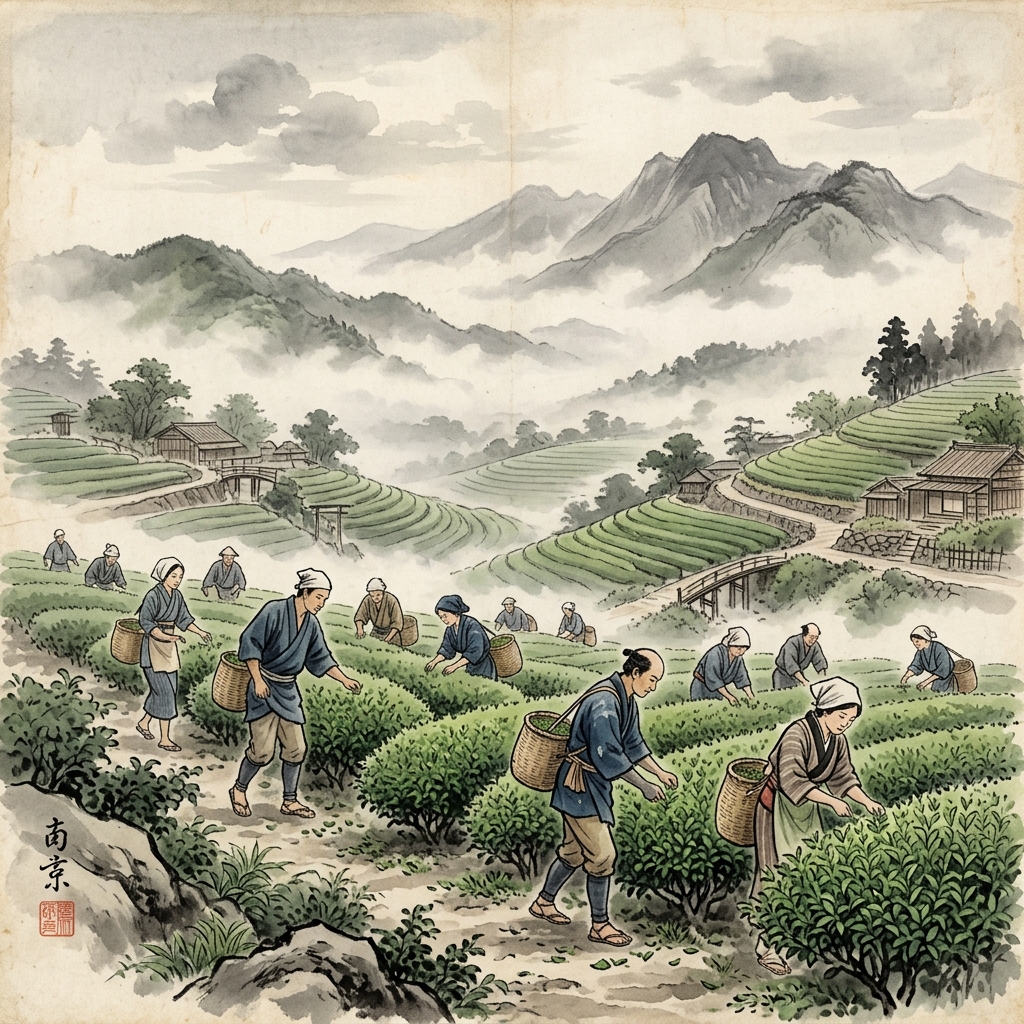
For centuries, cultivating premium matcha in Japan without the use of chemical fertilizers and pesticides has been considered nearly impossible. The process of shading tea plants (to increase chlorophyll and L-theanine) weakens the plant's natural defenses, making it highly susceptible to pests and disease. Furthermore, in deeply historical and densely packed tea regions like Kyoto (Uji), even if one farmer goes organic, pesticide drift from a neighboring conventional farm can ruin their certification.
This is why, despite massive global demand, genuine JAS, USDA, and EU-certified organic matcha has historically been scarce and astronomically expensive. However, one specific region in southern Kyushu has completely revolutionized the industry: Kagoshima.
The Geographical Advantage: Shirasu-Daichi
Kagoshima Prefecture sits on a vast plateau of Shirasu-Daichi (pyroclastic flows from ancient volcanic eruptions). This unique terroir is the foundational secret to Kagoshima's organic success.
1. Exceptional Drainage
Volcanic ash soil drains water phenomenally well. For tea plants, this means the root systems are never waterlogged. Deep, healthy roots can absorb trace minerals from the volcanic earth, providing the plant with enough natural vitality to survive the stressful shading process without relying on synthetic nitrogen fertilizers.
2. Geographic Isolation
Unlike the cramped valleys of central Japan, Kagoshima features expansive, flat plateaus. Tea estates here are massive and geographically isolated by natural forests and mountains. This creates a perfect "buffer zone," completely eliminating the risk of cross-contamination or chemical drift from non-organic neighboring farms.
Technological Innovation: The "Hurricane King"
Beyond geography, Kagoshima's tea farmers are arguably the most technologically advanced in Japan. To combat pests without using chemical sprays, agricultural engineers in Kagoshima developed the Hurricane King (Mabushi-kun in Japanese).
This remarkable machine is driven over the tea rows and uses high-pressure jets of air and water to literally blow pests (like the tea leafhopper and spider mites) off the leaves and vacuum them up. By combining natural volcanic resilience with cutting-edge mechanical pest control, Kagoshima farmers can produce 100% organic matcha that rivals the taste and vibrant color of conventional, chemically-treated teas.
Health and Wellness: The Cleanest Cup
Because matcha is consumed whole (you are drinking the actual suspended leaf, not just an infusion), the purity of the leaf is paramount. For health-conscious consumers and premium wellness brands, ensuring there are zero heavy metals or pesticide residues is critical. Kagoshima's organic matcha represents the cleanest, most potent delivery of EGCG (epigallocatechin gallate) antioxidants available on the market.
Source Certified Organic Kagoshima Matcha
WAGYUNINJA provides fully certified (JAS, EU, USDA) organic Kagoshima matcha directly to premium wellness brands, cafes, and restaurants worldwide.
✉️ Request Organic Certification & PricingRelated Articles
- Kyushu vs. Uji Matcha: Why Global Top Chefs Are Sourcing from Japan's Western Gastronomy Island
- First Flush vs. Second Flush Matcha: Why Ceremonial Grade Matters
- Importing Japanese Matcha to the UK & EU: Organic Certification and Compliance

Karen Hashimoto
Curator & Export Compliance Director · WAGYU NINJA
Karen sources directly from Japanese producers and handles export compliance for B2B buyers in 50+ countries. Based in Fukuoka, Japan. @konnichiwa.karen