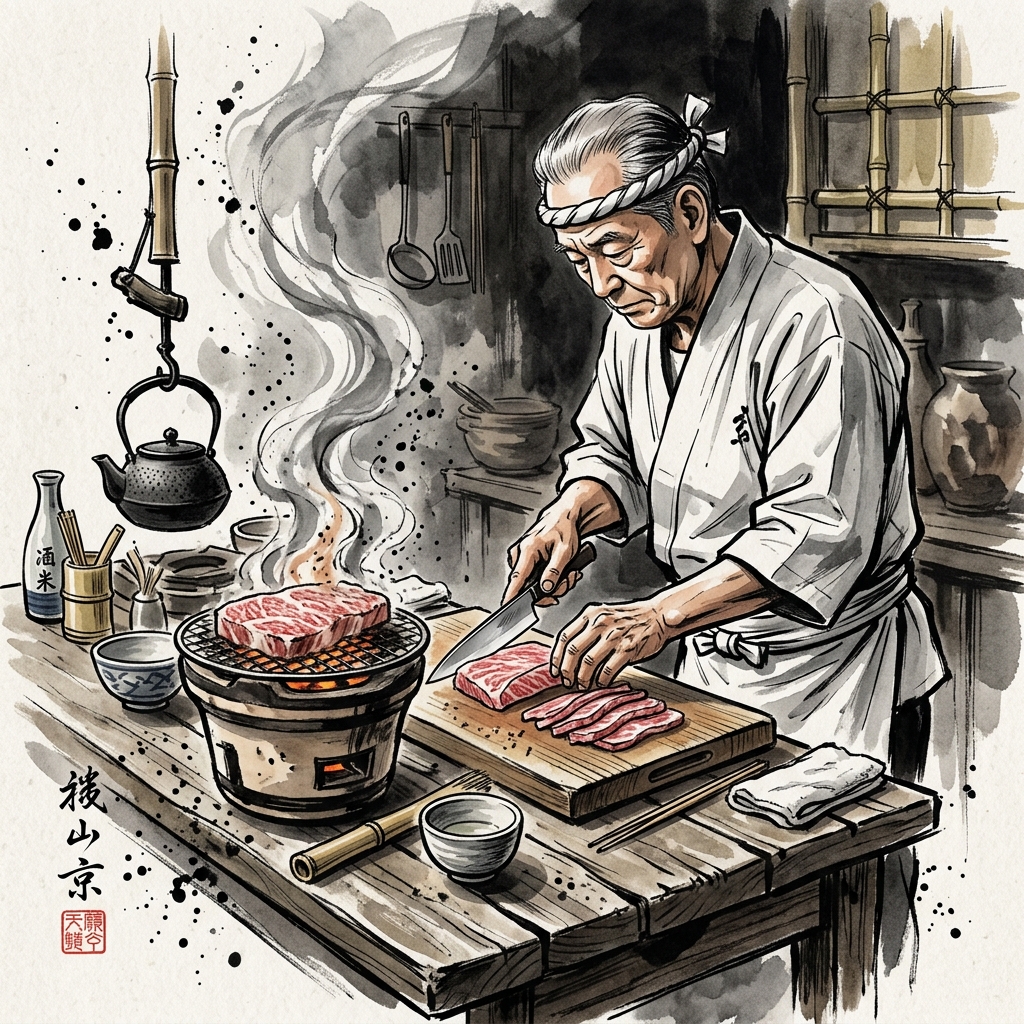
The Global Misunderstanding of "Wagyu"
The term "Wagyu" literally translates to "Japanese cow." However, in the global meat industry, the term has been co-opted. You will often see "American Wagyu" or "Australian Wagyu" on menus, often priced similarly to the authentic Japanese product. For a B2B buyer or restaurateur, understanding the distinction is critical for menu transparency and pricing.1. Genetics and Crossbreeding
- Japanese Wagyu: By Japanese law, Wagyu must be 100% purebred from one of four native strains (mostly Japanese Black). The lineage is tracked via a 10-digit identification number from birth to plate.
- American/Australian Wagyu: The vast majority of this beef is "crossbred" (often Angus crossed with Wagyu genetics). A cow needs only 50% Wagyu genetics to be marketed as Wagyu in many Western countries.
2. Fat Quality and Marbling (BMS)
- Japanese Wagyu: Famous for extreme intramuscular marbling (reaching BMS 12). The fat is rich in oleic acid, meaning it melts at room temperature, creating an unmatched, buttery texture.
- Crossbred Wagyu: Tends to have a meatier, beefier flavor closer to traditional Angus, with more marbling than USDA Prime, but it rarely achieves the melt-in-the-mouth texture of A5 Japanese Wagyu.
3. Rearing and Diet
Japanese Wagyu are raised for nearly 30 months in highly controlled, stress-free environments, fed a specific diet of grains and rice straw to whiten the fat. Western Wagyu are often raised on open pastures and finished on grain for a shorter period.The Verdict for Importers
If your clients want a massive 16oz steak with a robust, beefy flavor, American/Australian crossbred is excellent. But if your goal is to offer the ultimate luxury culinary experience—the incredibly rich, delicate, and exclusive A5 status—there is absolutely no substitute for 100% authentic Japanese Wagyu imported by Wagyu Ninja.
Karen Hashimoto
Curator & Export Compliance Director · WAGYU NINJA
Karen sources directly from Japanese producers and handles export compliance for B2B buyers in 50+ countries. Based in Fukuoka, Japan. @konnichiwa.karen